
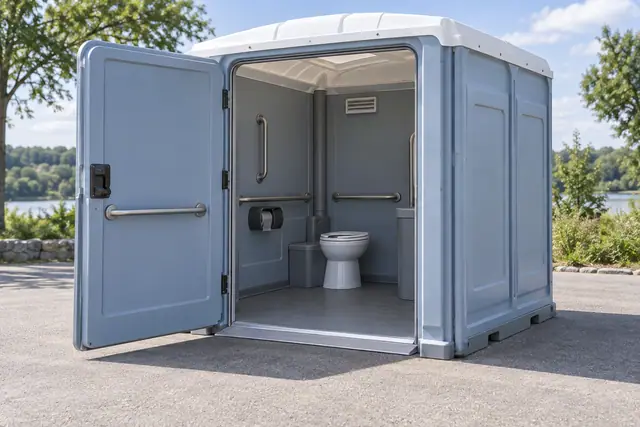
Consider more than the main car park
People may arrive by car, at a drop-off point or on foot through a different entrance. A facility that looks close to one parking area can still be difficult to reach from another part of the event or worksite.
Ask the responsible organiser to describe the routes people will actually use. Keep functional access needs in the conversation without requiring guests to provide medical histories to the equipment supplier.
Review the unit and the journey together
Confirm the actual offered model and the usable approach from the relevant arrival areas. Distance alone does not describe the surface, changes in level, gates or other conditions along that journey.
A site lead or appropriate access adviser should review the overall arrangement where specialist judgement is needed. Hiring an accessible-labelled unit does not independently certify the entire property or every route to it.
Give visitors accurate directions
Once the arrangement is agreed, use clear location information so people are not sent to a convenient-looking but unsuitable alternative. Include the accessible facility in staff or volunteer instructions rather than leaving its location to guesswork.
Tell the provider and site lead if the arrival pattern changes. Moving a drop-off point or closing an entrance can change the useful route even when the restroom itself has not moved.
Questions before you book
Is proximity to accessible parking enough to settle the arrangement?
No. Review the actual offered facility and the routes from relevant arrival points, including any agreed drop-off or pedestrian entrance.